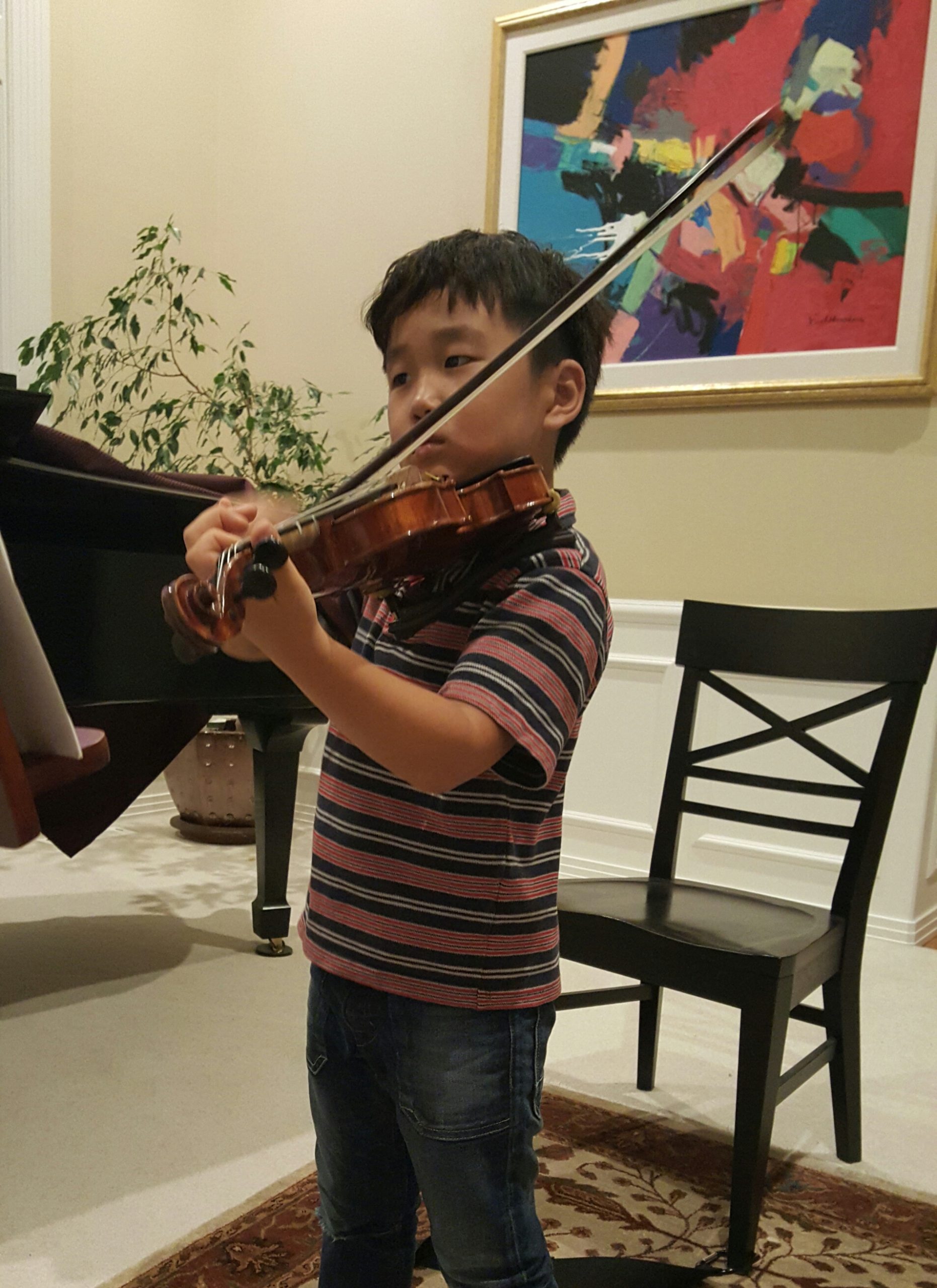

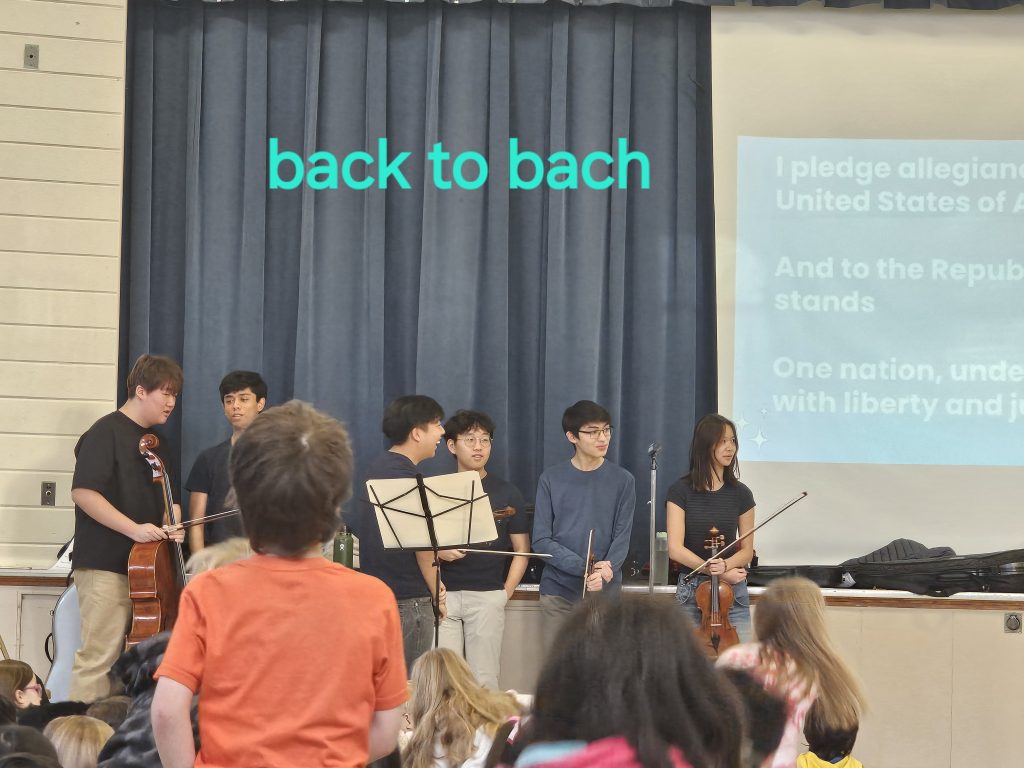
When I first joined the Back to BACH Project in Portland, I thought I’d simply teach violin to a few kids. But soon after stepping into that role, I realized how much more it was. This is not just about music — it’s about community, outreach, and planting seeds in places you might not expect.
I remember seeing my name listed among the mentors or members on the Portland page — “Andrew Lee — Violin, Member since Fall 2023” — and feeling a rush of responsibility. This wasn’t just volunteering; I was now part of something bigger.
On my first day, I walked into a room full of expectant faces. There were more kids than I had imagined. I tried to begin simply — “Let me show you a scale, let me show you this note” — but I stumbled. My hands shook a little. My words felt clumsy.
So I took it seriously. Every week I drafted a curriculum: warm-ups, simple songs, duets that beginners could handle. I looked up pieces that had gentle melodies, ones that could bring small wins. I’d spend late nights searching sheet music, adapting parts, making sure that even the simplest line would have beauty.
Because one truth became clear: being good at an instrument doesn’t automatically make you a good teacher. Teaching is its own path — you must translate, adapt, empathize.
One of the kids kept fingering the strings, tapping, messing around. Instead of scolding, I knelt down and explained how each instrument is delicate — how a bow can break, how a string can snap — and how we honor them by caring.
The project rents the instruments and distributes them. Violins, small keyboards, sometimes wind instruments. The piano was always a favorite — loud, responsive, fun. The kids would crowd around it.
To nurture interest, the last hour of class was always ensemble time. Violin with piano, simple harmonies, sometimes children humming along. In those final minutes, the room would soften; musicians and beginners blending. That part always reminded me of the hush during a recital when everything else stops.
Because Back to BACH doesn’t just teach music — it links neighborhoods to notes, classrooms to concerts, children to possibility. In Portland, they arrange regional presentations at local schools (like Cedar Hill Elementary or Metzer Elementary) as part of the program. I realized that what I was doing with these kids fit into a larger thread — a movement to bring classical music into everyday life, not just concert halls.
I hope my teaching wasn’t just about technique. I hope it gave them courage to try, curiosity to ask, and joy in sound. I hope maybe, for some, this becomes a memory like mine — the first time they held an instrument, listened carefully, and wondered what music could make of them.